
The Science Behind the Better Chicken Commitment
The Australia–New Zealand Better Chicken Commitment is informed by independent scientific research published in academic journals, together with the welfare codes, industry standards, and certification scheme requirements that apply in Australia and New Zealand.
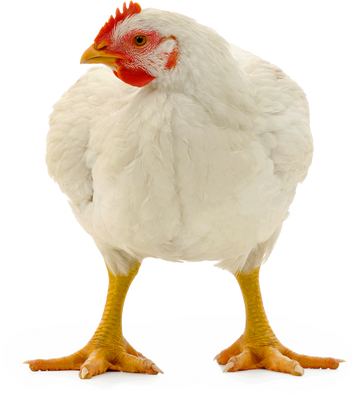
The Australia–New Zealand Better Chicken Commitment is informed by independent scientific research published in academic journals, including Poultry Science, Animals, PLoS One, Applied Animal Behaviour, and World’s Poultry Science Journal, together with the official government welfare codes, industry standards, and third-party certification scheme requirements that apply in Australia and New Zealand.
This body of research covers each of the Better Chicken Commitment’s components — breed, stocking density, lighting, litter, environmental enrichment, and slaughter – and the wide range of welfare outcomes they influence, including walking ability, activity level, capacity to express natural behaviour, incidence of skin lesions and muscular myopathies, disease susceptibility, and mortality.
The science behind each aspect of the Better Chicken Commitment is detailed in the Welfare of Meat Chickens in Australia and New Zealand whitepaper.
Whitepaper Conclusion
- The meat chicken industries in Australia and New Zealand are currently defined by high-volume production of fast-growing chickens, a model that prioritises economic efficiency over the welfare of individual birds.
- The scientific evidence detailed throughout the whitepaper demonstrates how the pursuit of rapid growth and high breast meat yields has introduced systemic health issues, including debilitating leg weakness, heart failure, and painful muscle damage.
- Improving the lives of meat chickens in Australia and New Zealand requires a transition away from fast-growing genetics, as the physical makeup of these birds is fundamentally at odds with good health. Moving to slower-growing breeds is essential to reduce lameness and metabolic disease.
- Alongside genetic changes, environmental improvements are also needed to support the birds’ natural behaviours. This includes reducing stocking densities to allow for better movement and drier litter, as well as providing all birds with natural light and adequate enrichment.
- The industry must also address the welfare risks present at the end of a bird’s life. The fear and pain associated with traditional electrical waterbath stunning, particularly the stress of hanging conscious birds upside down, remains a major concern. Shifting to controlled atmosphere stunning offers a significant improvement by removing the need for live handling, inversion and shackling and ensuring a more reliable transition to unconsciousness.
- Beyond animal welfare, these changes have broader implications for public health and biosecurity. Intensive farming at high densities increases the risk of zoonotic diseases, such as highly pathogenic avian influenza, which can have devastating effects.
- Ultimately, the long-term success of the poultry industry in Australia and New Zealand depends on its ability to demonstrate that production methods align with modern animal welfare science. The requirements of the BCC provide a realistic, measured framework to vastly improve meat chicken welfare throughout the birds’ lives, from genetic selection, housing and enrichment through to slaughter.
- Adopting the higher standards of the BCC will allow the industry to meet the ethical expectations of today’s consumers and help to ensure millions of birds experience a life worth living.